






AIdsorb is a Python package for deep learning on porous materials.
It is designed to automate the repetitive tasks common to deep learning workflows, allowing researchers to focus on developing and testing new ideas instead of writing boilerplate code.
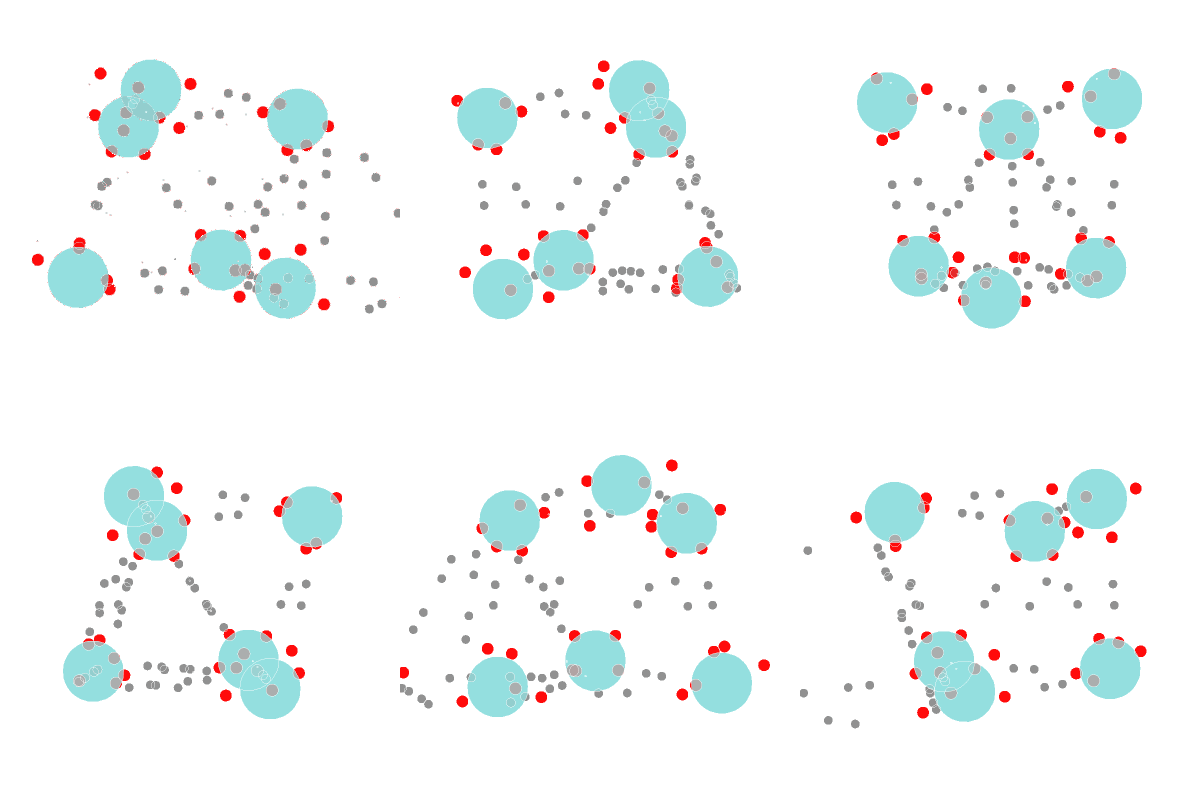
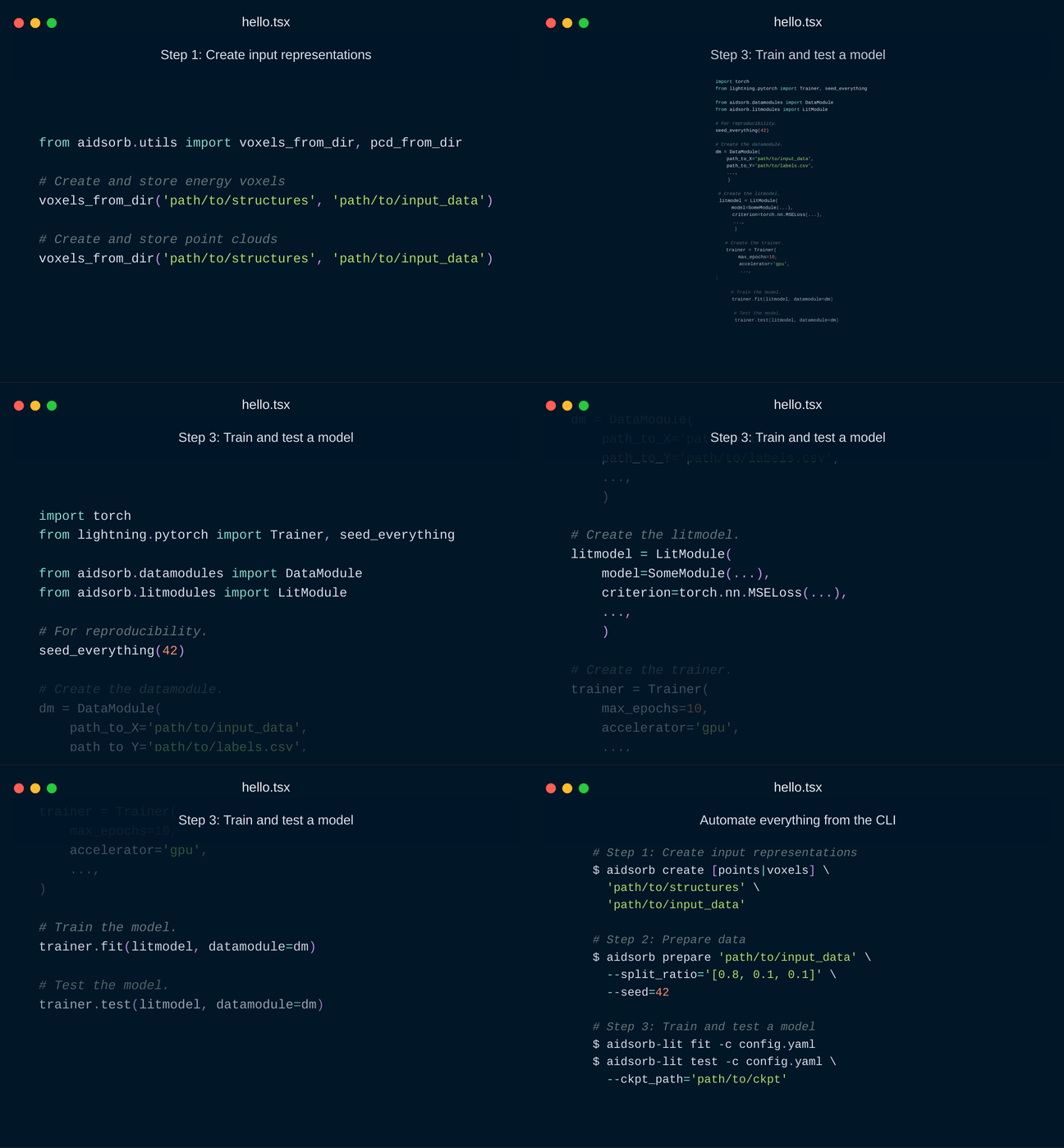
AIdsorb provides a unified, configuration-driven interface to:
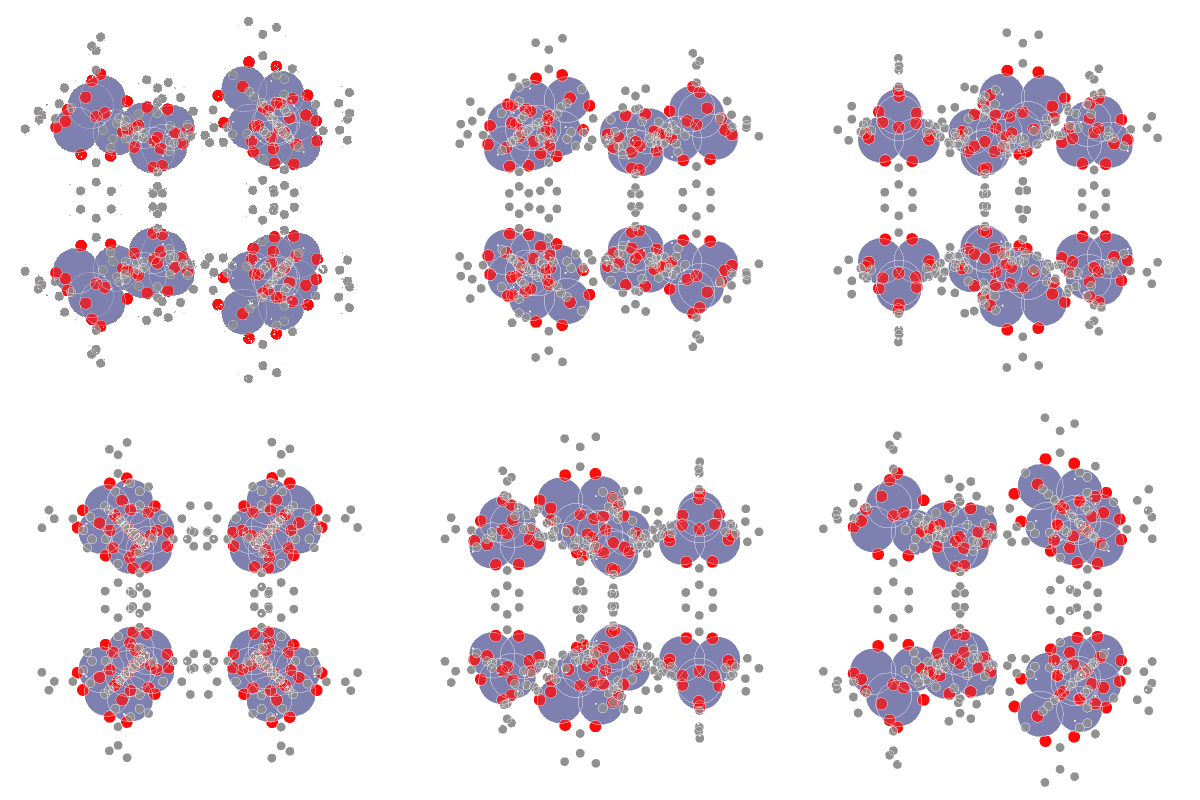
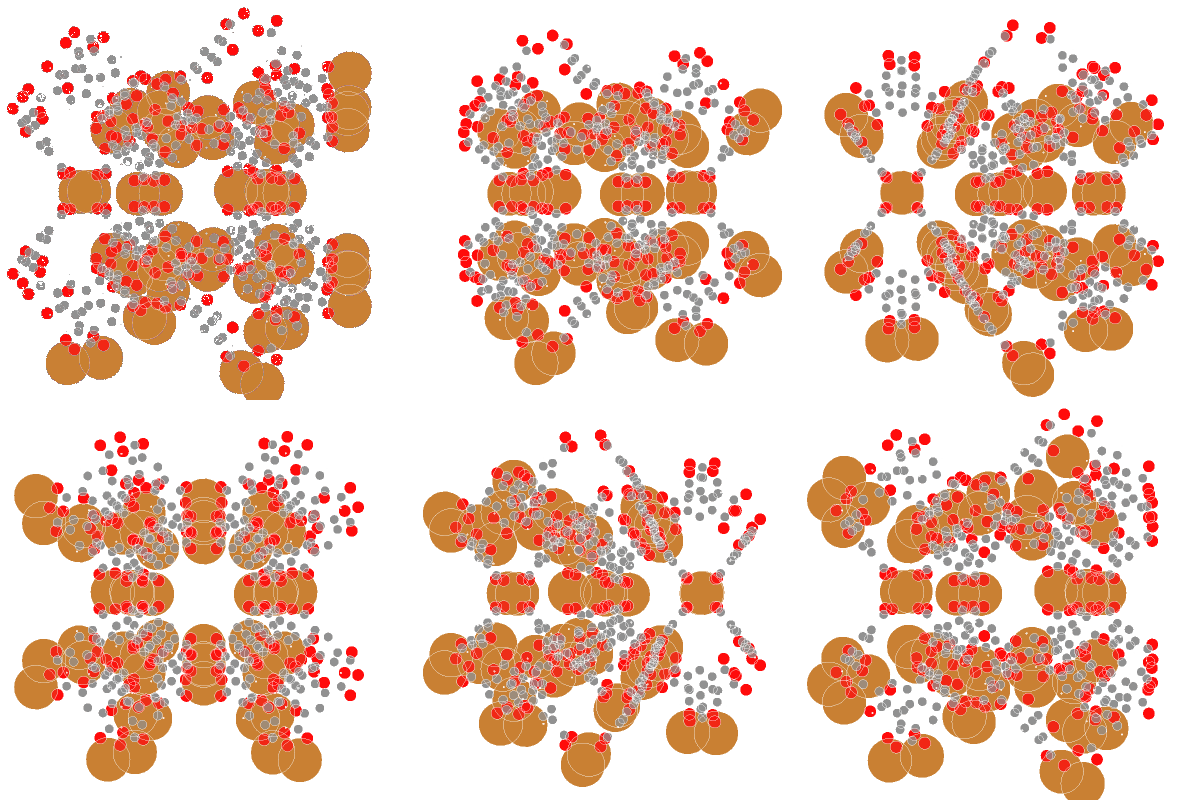
- 🛠️ Generate input representations of materials.
- 🗂️ Prepare and manage datasets.
- 🤖 Train and fine-tune models with minimal boilerplate.
- 🔬 Build reproducible and repeatable deep learning workflows.
Important
It is strongly recommended to perform the installation inside a virtual environment.
Assuming an activated virtual environment:
pip install aidsorbNote
Refer to the 📚 Documentation for more information.
If you have any questions about how to use AIdsorb, we encourage you to post them in the 💬 Discussions section of the repository.
Note
Please make sure to read the documentation carefully first before asking your question.
We welcome contributions from the community! Please read our 🙌 Contributing Guidelines before submitting PRs or opening issues.
- To cite the software, please refer to the citation file or click the citation button.
- To cite the paper, please use the following BibTeX entry:
Show BibTex entry
@article{Sarikas2024,
  title = {Gas adsorption meets geometric deep learning: points, set and match},
  volume = {14},
  ISSN = {2045-2322},
  url = {http://dx.doi.org/10.1038/s41598-024-76319-8},
  DOI = {10.1038/s41598-024-76319-8},
  number = {1},
  journal = {Scientific Reports},
  publisher = {Springer Science and Business Media LLC},
  author = {Sarikas,  Antonios P. and Gkagkas,  Konstantinos and Froudakis,  George E.},
  year = {2024},
  month = nov
}AIdosrb is released under the GNU General Public License v3.0 only.